
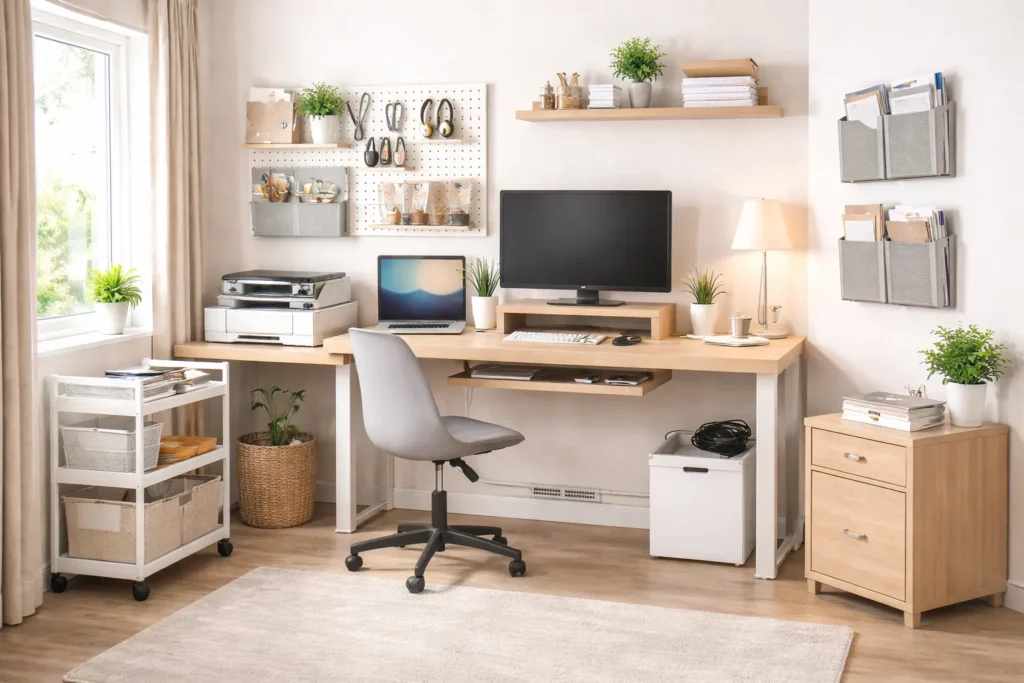
A small home office needs more than just a desk and chair — it needs a setup that supports focus, organization, and daily productivity without feeling cramped.
In tight spaces, clutter builds quickly. Cables spread, paperwork piles up, and limited storage can make even simple tasks frustrating. The key is to keep your workspace streamlined, use vertical space effectively, and choose pieces that serve multiple functions.
Below are practical space-saving solutions designed specifically for small home offices. Each one helps reduce desk clutter, improve organization, and make better use of limited square footage while maintaining a clean, efficient workspace.
1. Cable Management Solutions
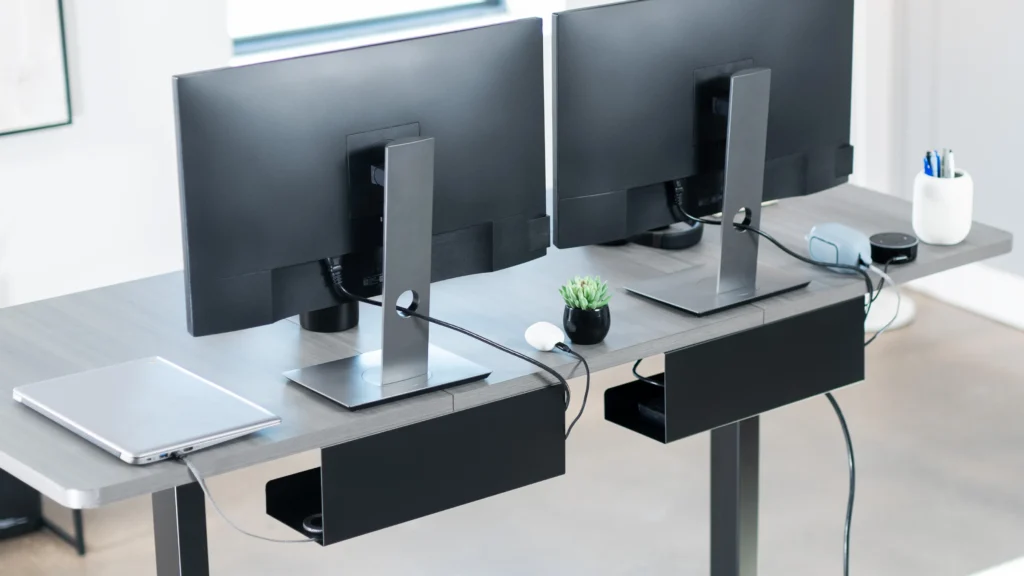
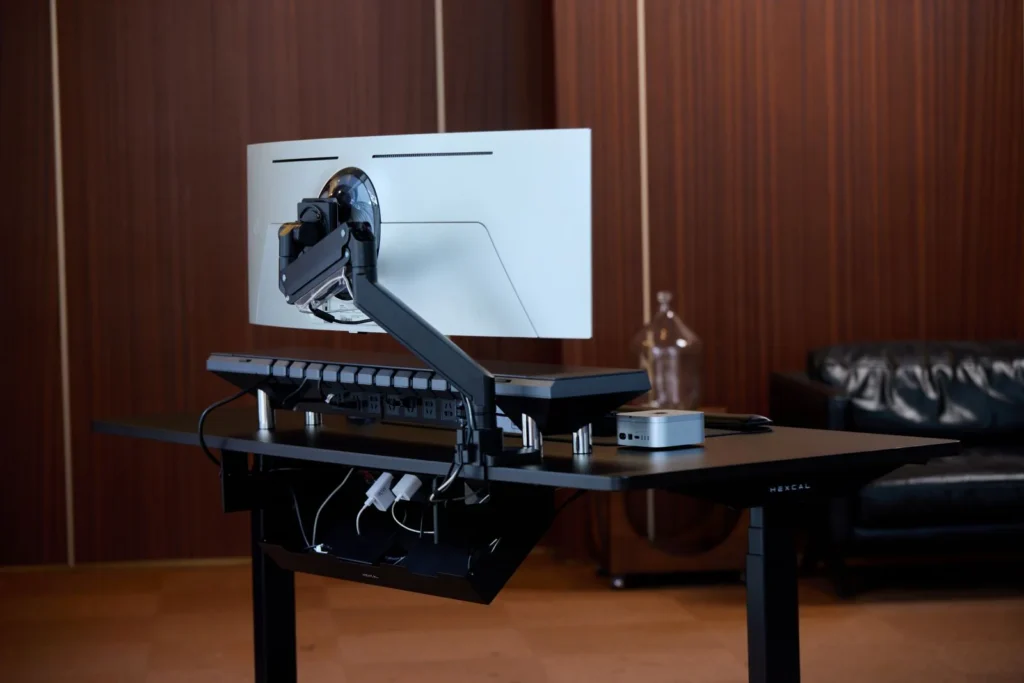
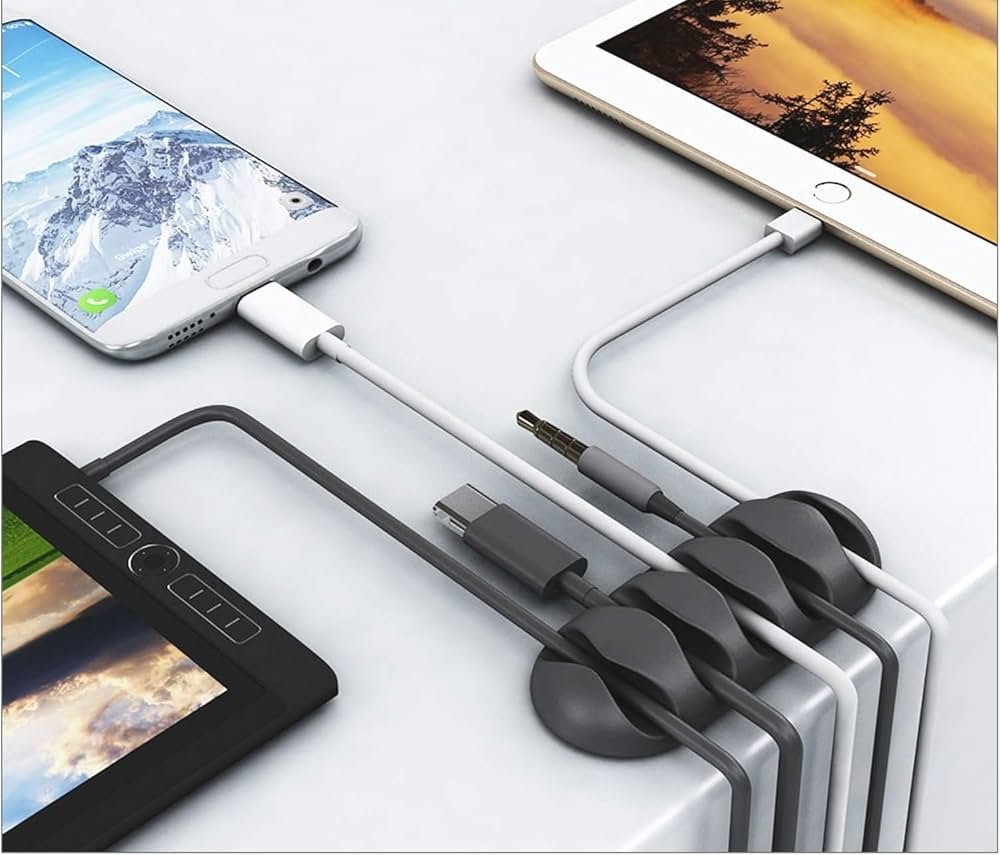
Cables are one of the fastest ways to make a home office feel cluttered. Even a clean desk can look messy when cords are visible or tangled.
Start by organizing cables behind and underneath your desk. Use cable trays to hold power strips off the floor, and clips or sleeves to guide cords neatly along the desk.
If cables are hanging down or spreading across your workspace, they’re taking up both physical and visual space. Keeping them contained creates a cleaner, more focused work environment.
Our Recommended Picks:

Why We Like It: We like how it keeps power strips and cords tucked beneath the desk, freeing up valuable floor and desktop space.

Why We Like It: This sleeve bundles multiple cords together to create a cleaner, more organized workspace and reduce cable clutter.
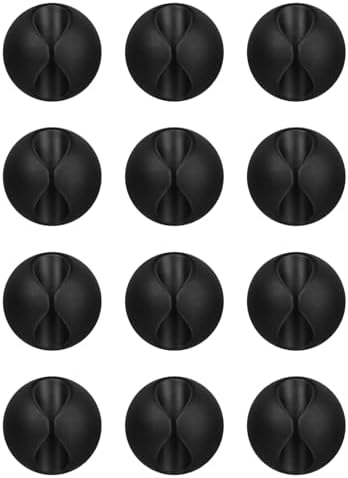
Why We Like It: We like the simple way it keeps charging cables within reach and prevents them from falling behind the desk.
2. Under-Desk Drawer
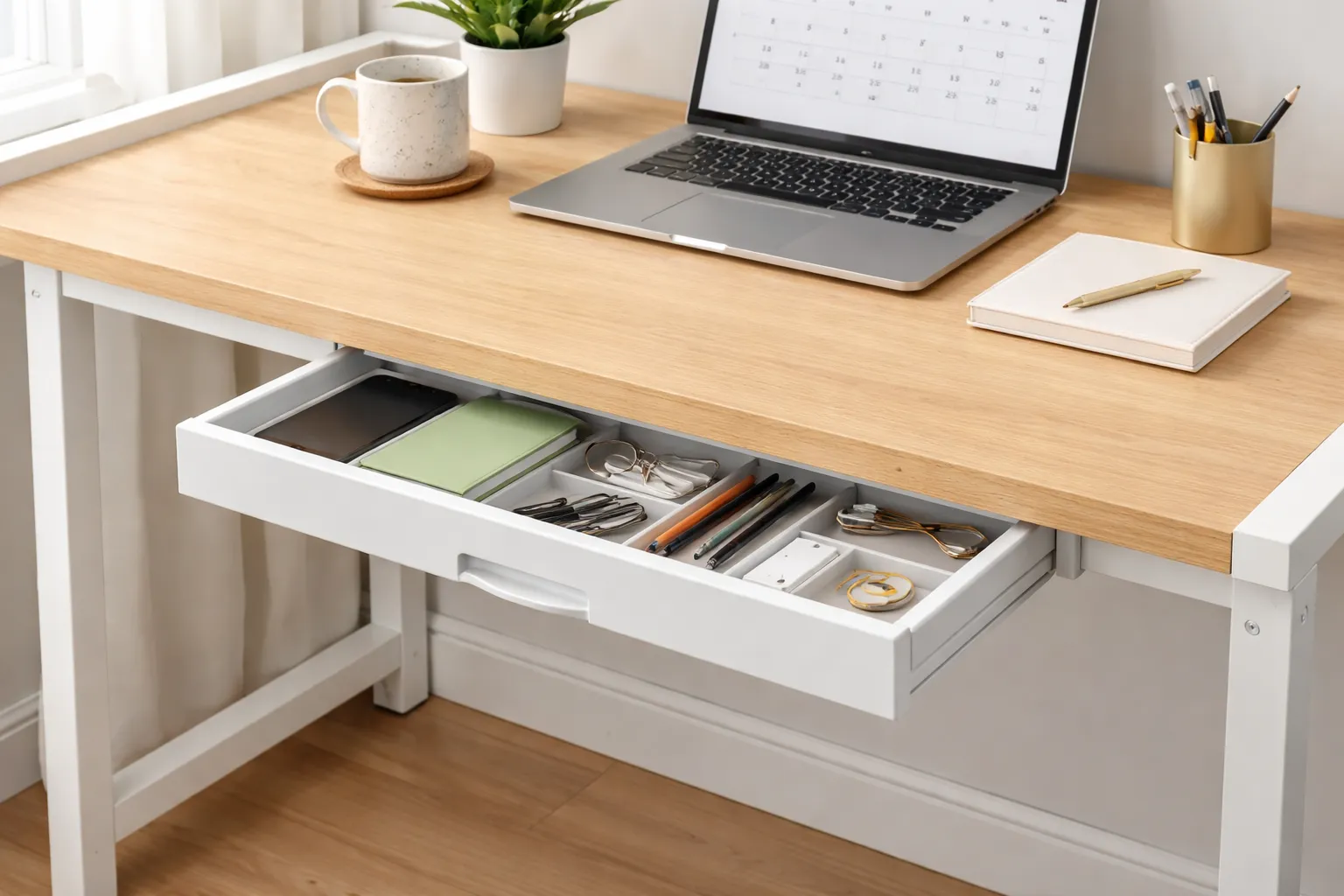
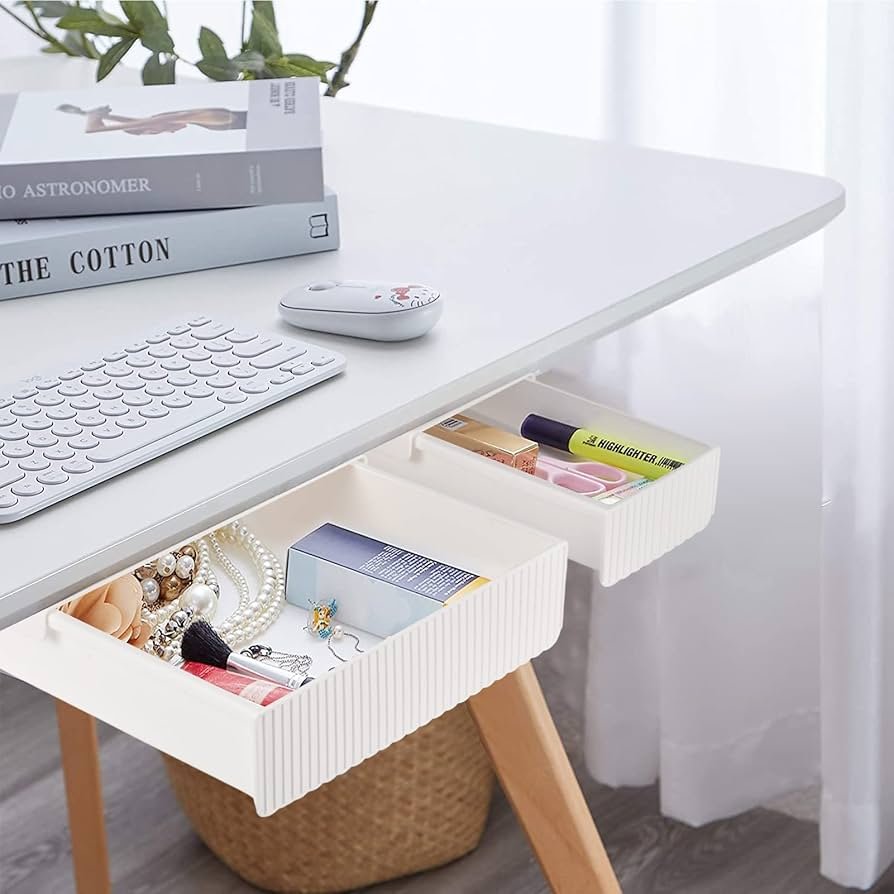
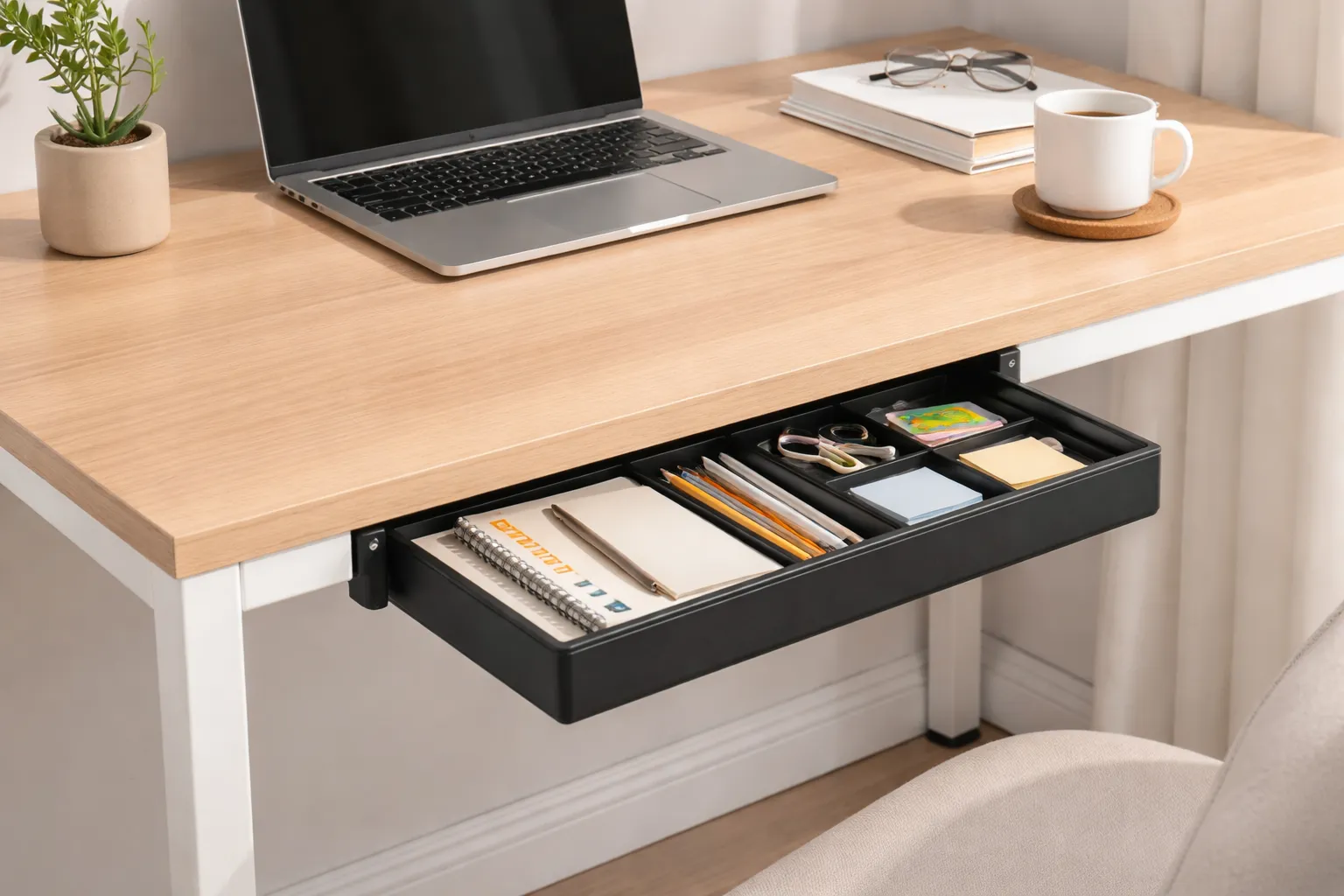
When small items start covering your desk, your workspace quickly feels smaller than it actually is.
An under-desk drawer adds storage without increasing your desk footprint, keeping everyday essentials within reach but off the surface.
Before installing, check leg clearance — you’ll need about 2–3 inches of space underneath your desk. These drawers work best for smaller office items like pens, notebooks, and cables.
Our Recommended Picks:

Why We Like It: This drawer adds hidden storage without taking up desk space, making it easy to keep everyday supplies within reach but out of sight.

Why We Like It: We like how it keeps power strips and cords tucked beneath the desk, freeing up valuable floor and desktop space.
3. Wall Pegboards
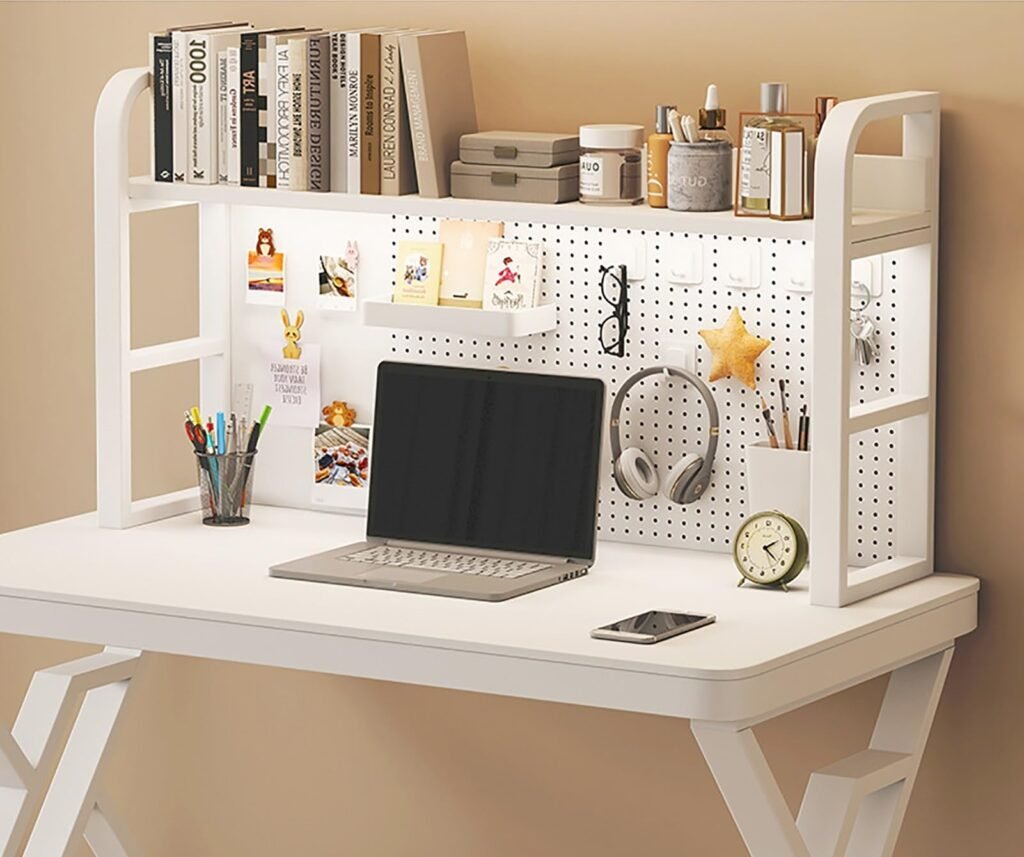
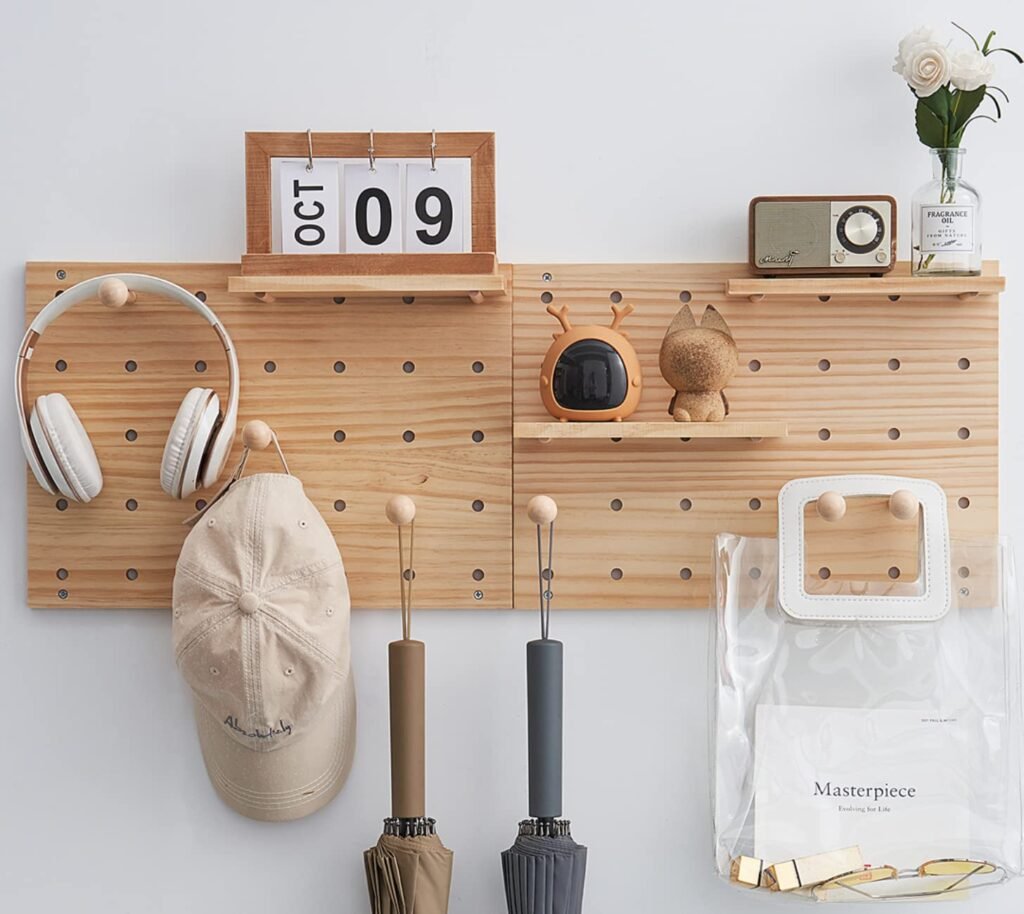
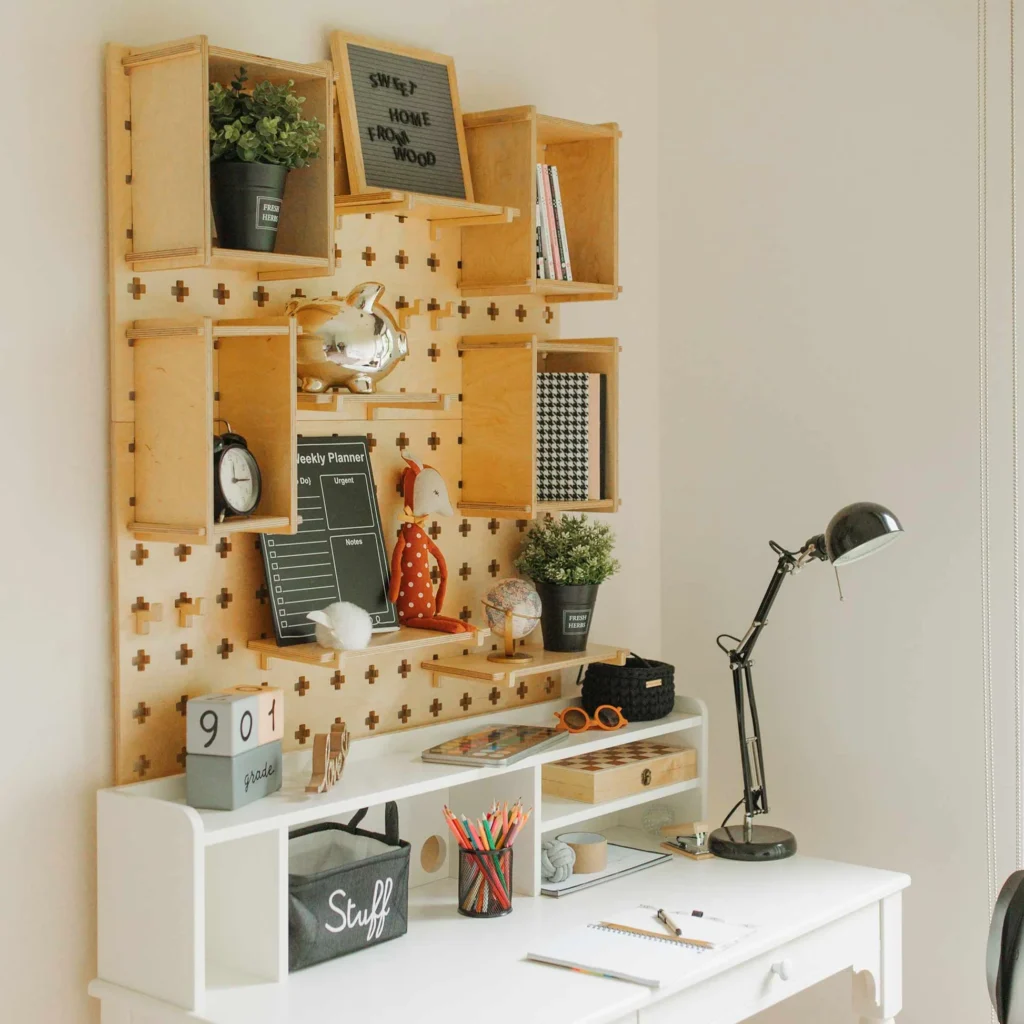
A small home office benefits most from vertical storage. Pegboards turn unused wall space into a flexible organization system.
Instead of crowding your desk, pegboards keep frequently used items visible and within reach. They’re ideal for organizing supplies, cables, or tools.
Even a small pegboard can hold a surprising amount when arranged vertically.
Our Recommended Picks:

Why We Like It: We like the multiple panels for turning unused wall space into flexible storage for office supplies, tools, and accessories.

Why We Like It: The variety of hooks, trays, and holders makes it easy to customize the pegboard around your specific storage needs.
4. Monitor Risers with Storage
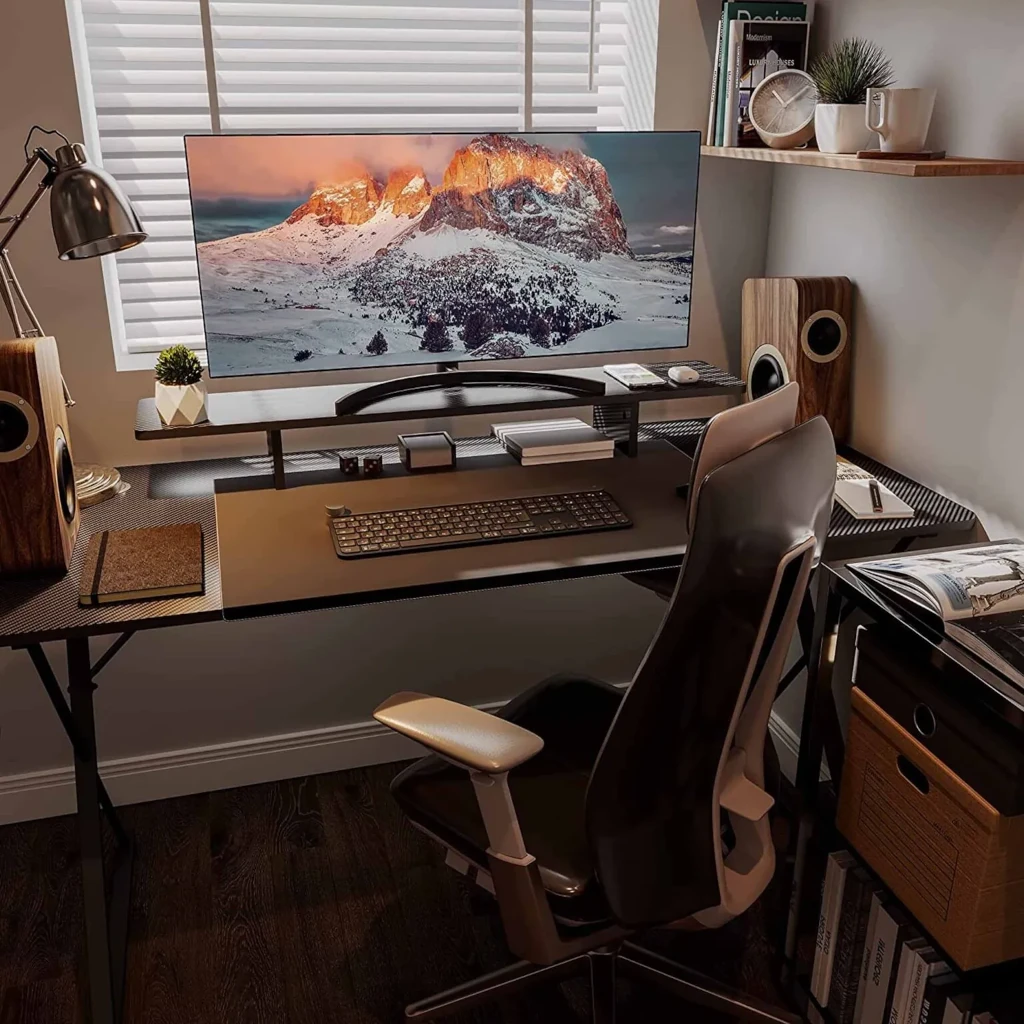
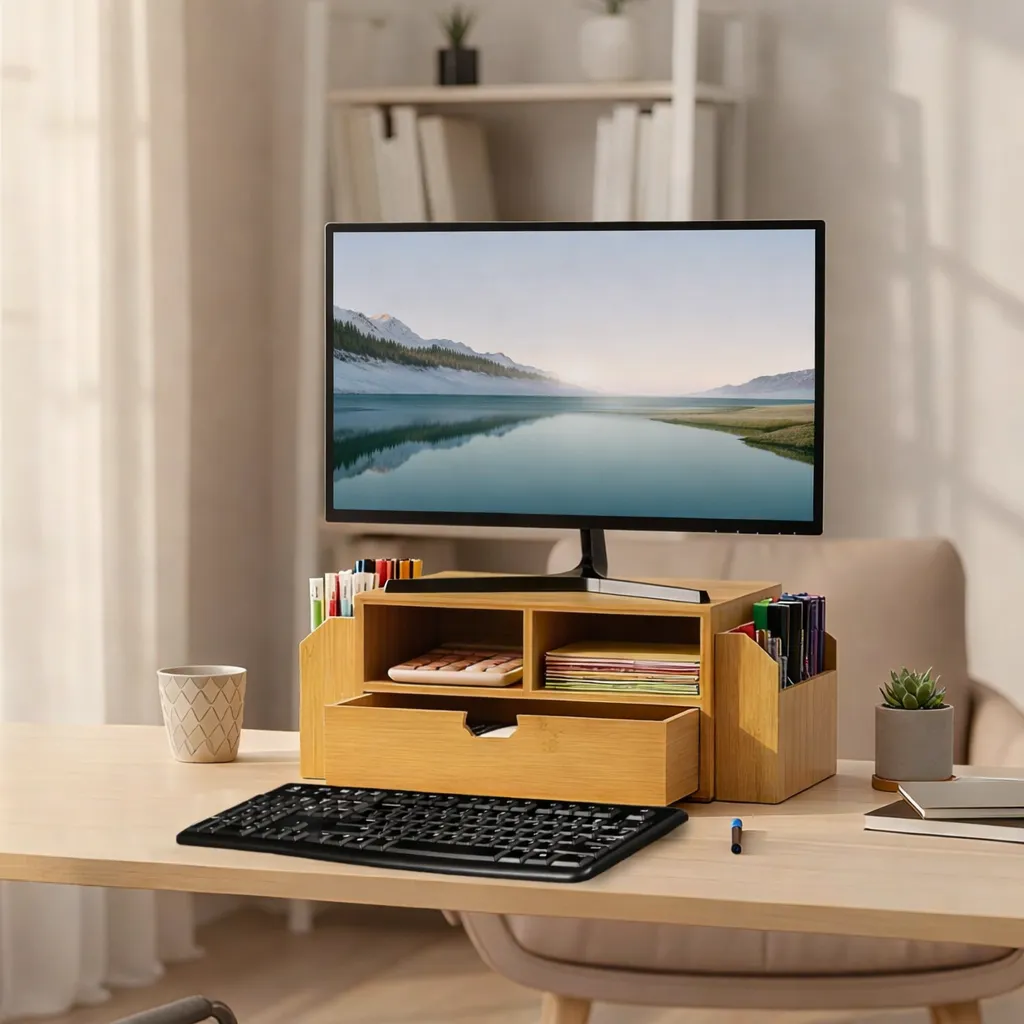
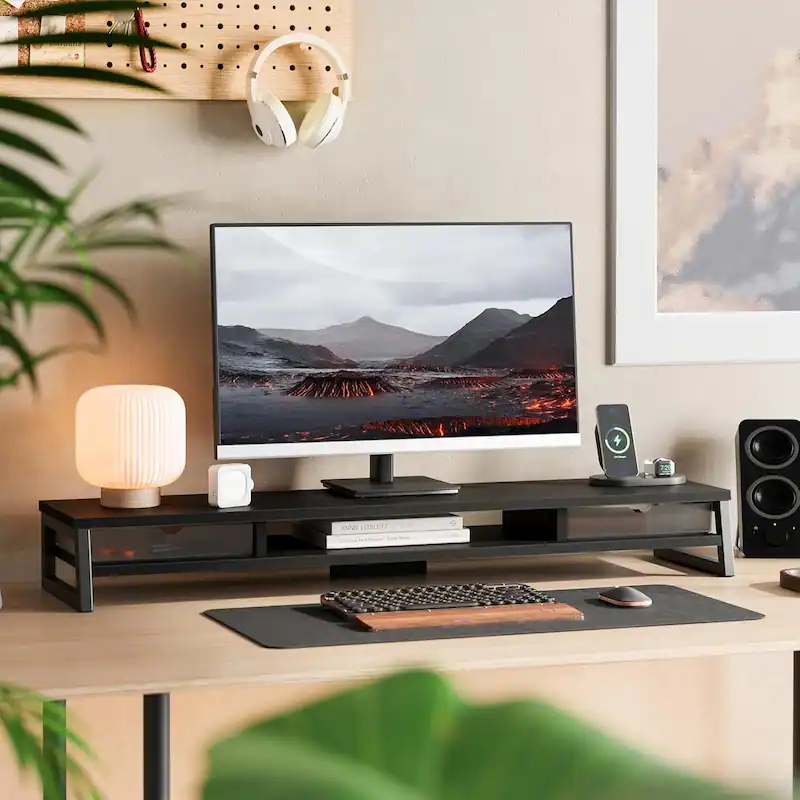
A monitor riser improves ergonomics while adding usable space underneath your screen — something every small desk needs.
The top of your monitor should sit at or slightly below eye level. If you’re looking down, your setup likely needs adjusting.
Risers with open space underneath are ideal for storing keyboards, notebooks, or small accessories without making your desk feel crowded.
Our Recommended Picks:
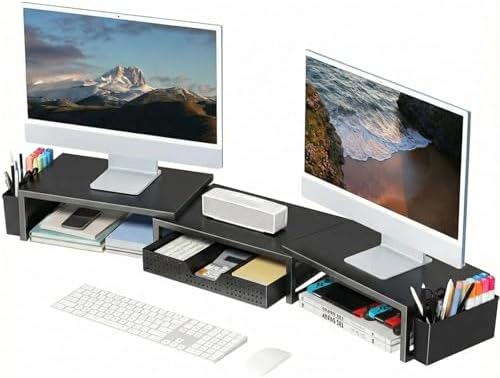
Why We Like It: This monitor riser creates extra storage without taking up additional desk space. The built-in drawer is useful for keeping small office essentials organized and out of sight while also raising the monitors to a more comfortable viewing height.

Why We Like It: It raises the monitor while providing extra organization for small desk accessories, helping keep the workspace clear.

Why We Like It: The transparent design adds useful storage without making the desk feel visually heavy or crowded.
5. Corner Desks
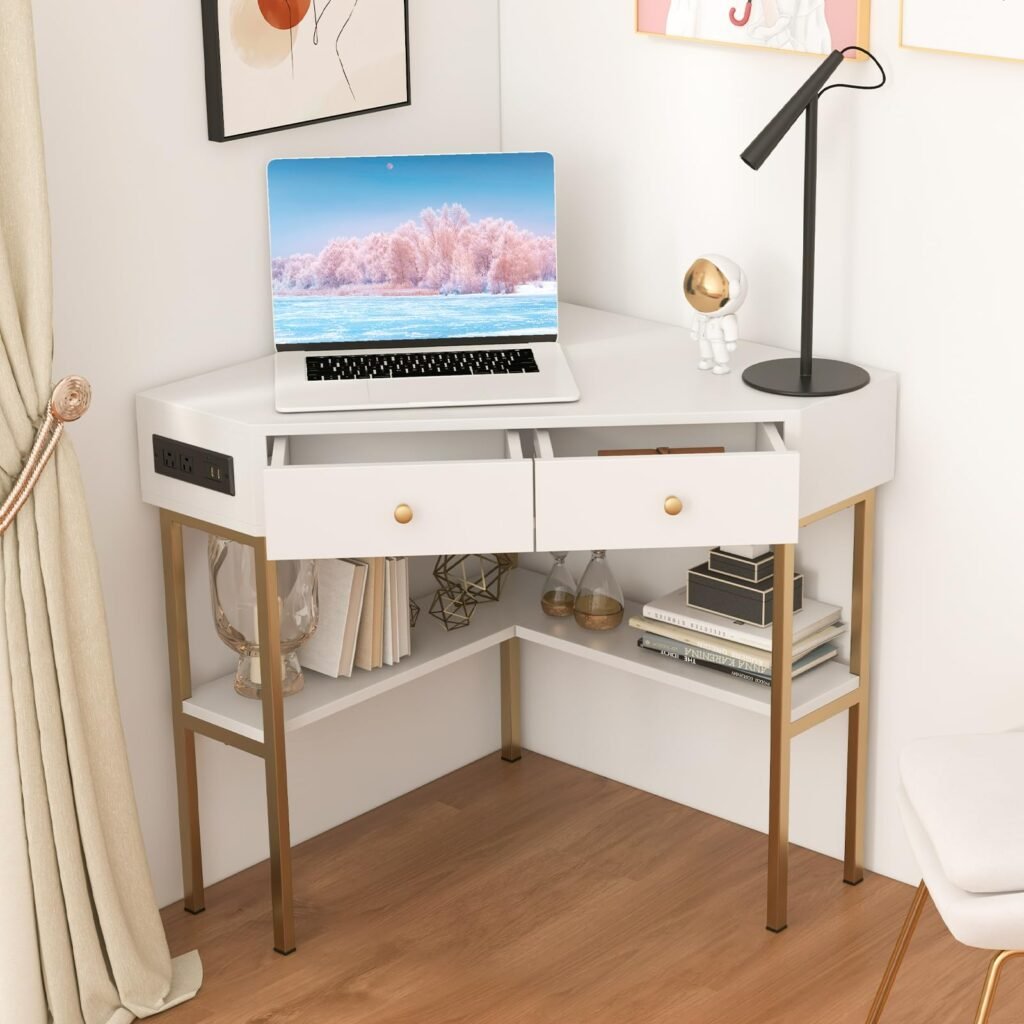
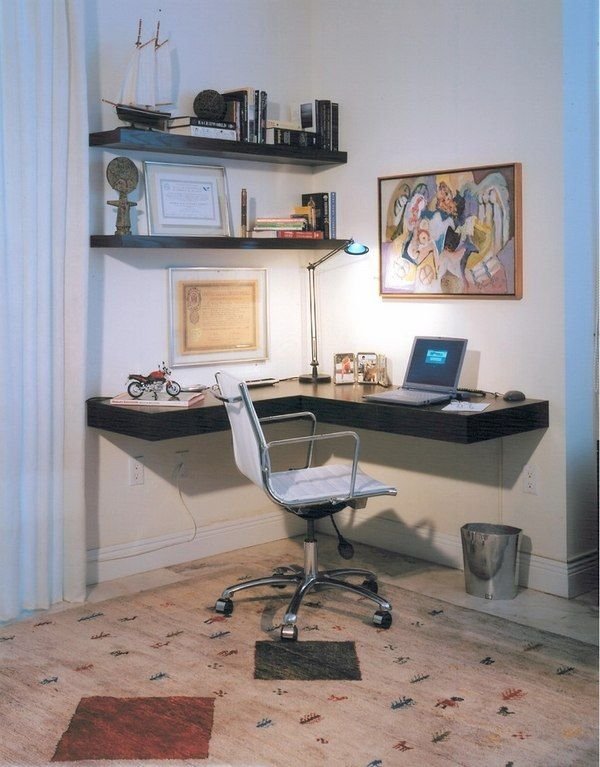
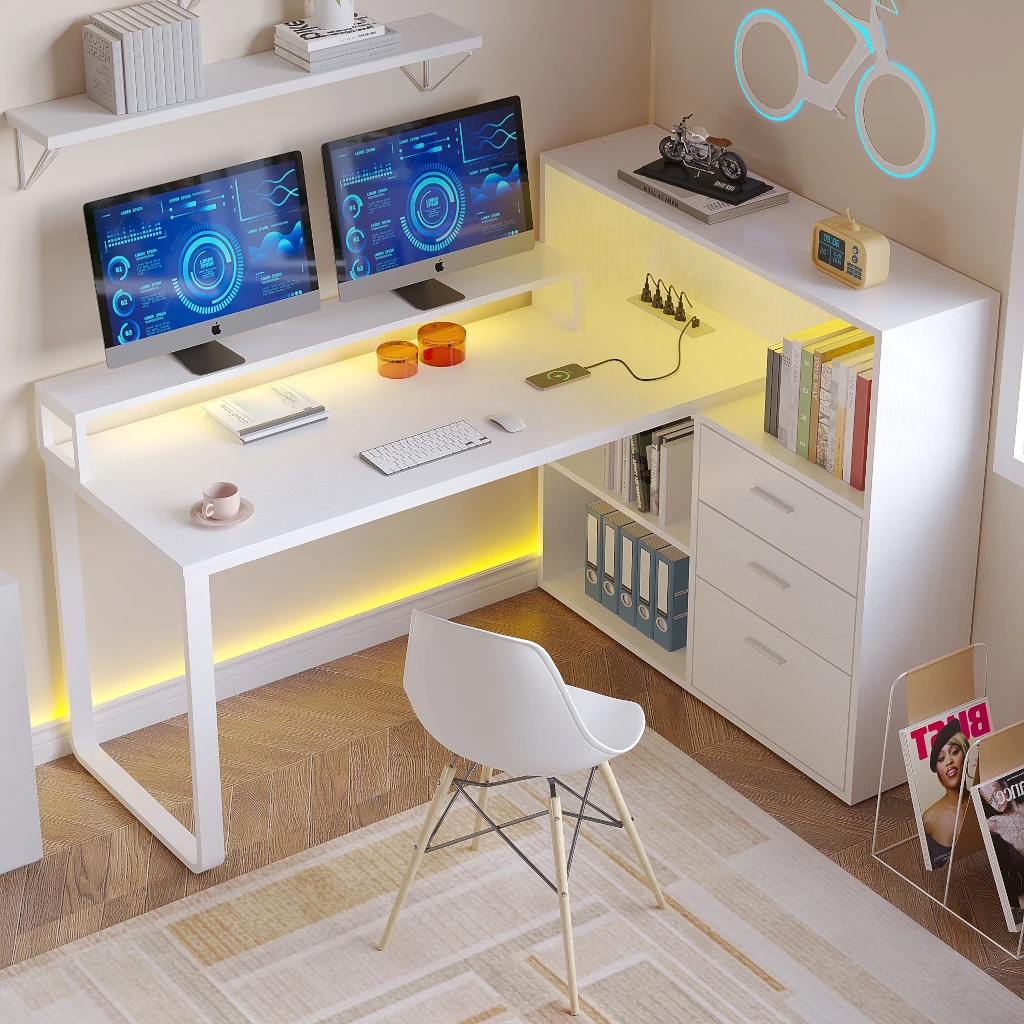
Corners are often wasted space in a home office, but they can become one of the most efficient work areas.
A corner desk keeps the center of the room open while maximizing usable surface area. This helps small offices feel less crowded and more functional.
Measure both walls before choosing a desk, and avoid designs that extend too far into the room.
Our Recommended Picks:
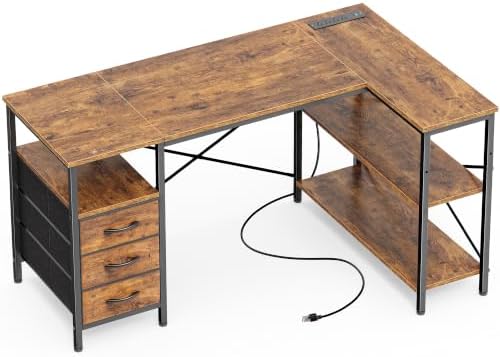
Why We Like It: The L-shaped design makes efficient use of an empty corner while providing plenty of workspace without taking over the room.

Why We Like It: We like the spacious L-shaped layout for fitting multiple monitors and accessories while keeping the main room area open.

Why We Like It: Its compact design makes it a practical option for turning an unused corner into a functional workspace.
6. File Storage & Organizers
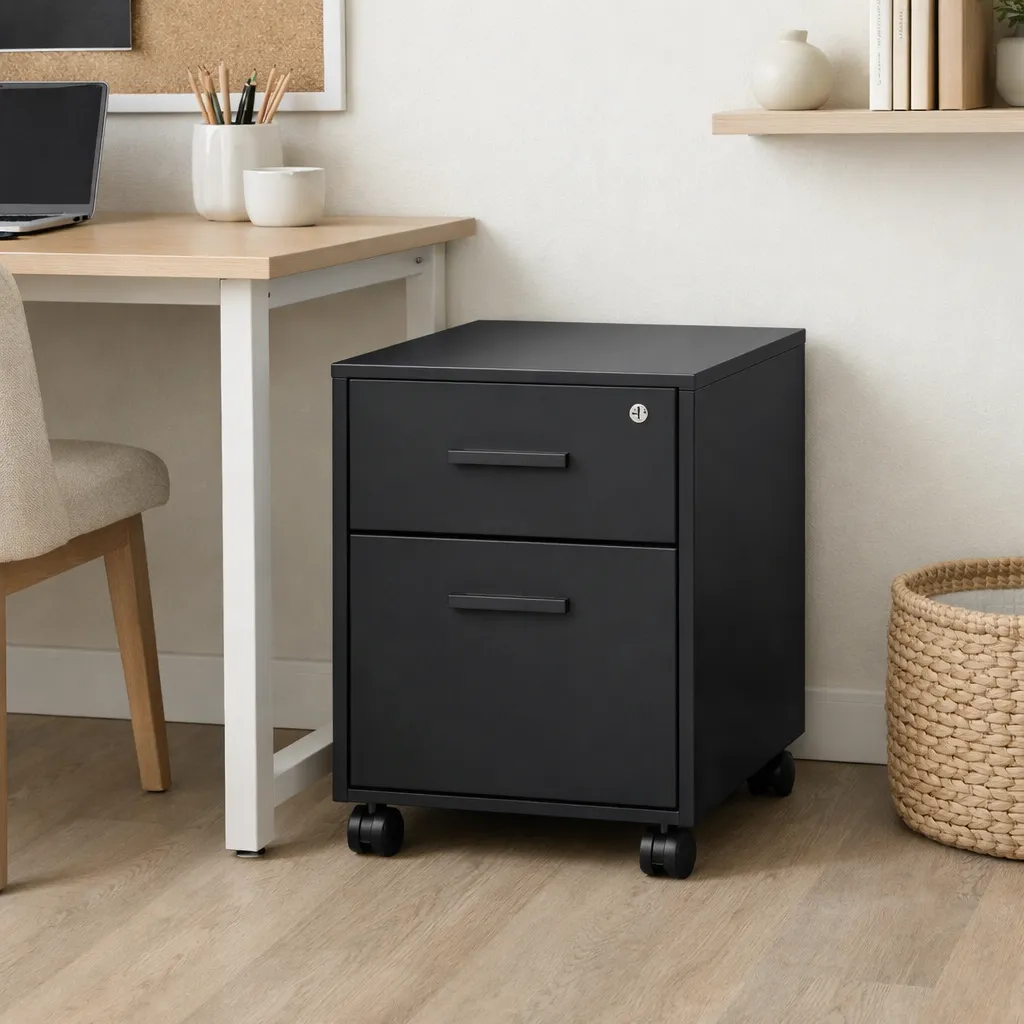
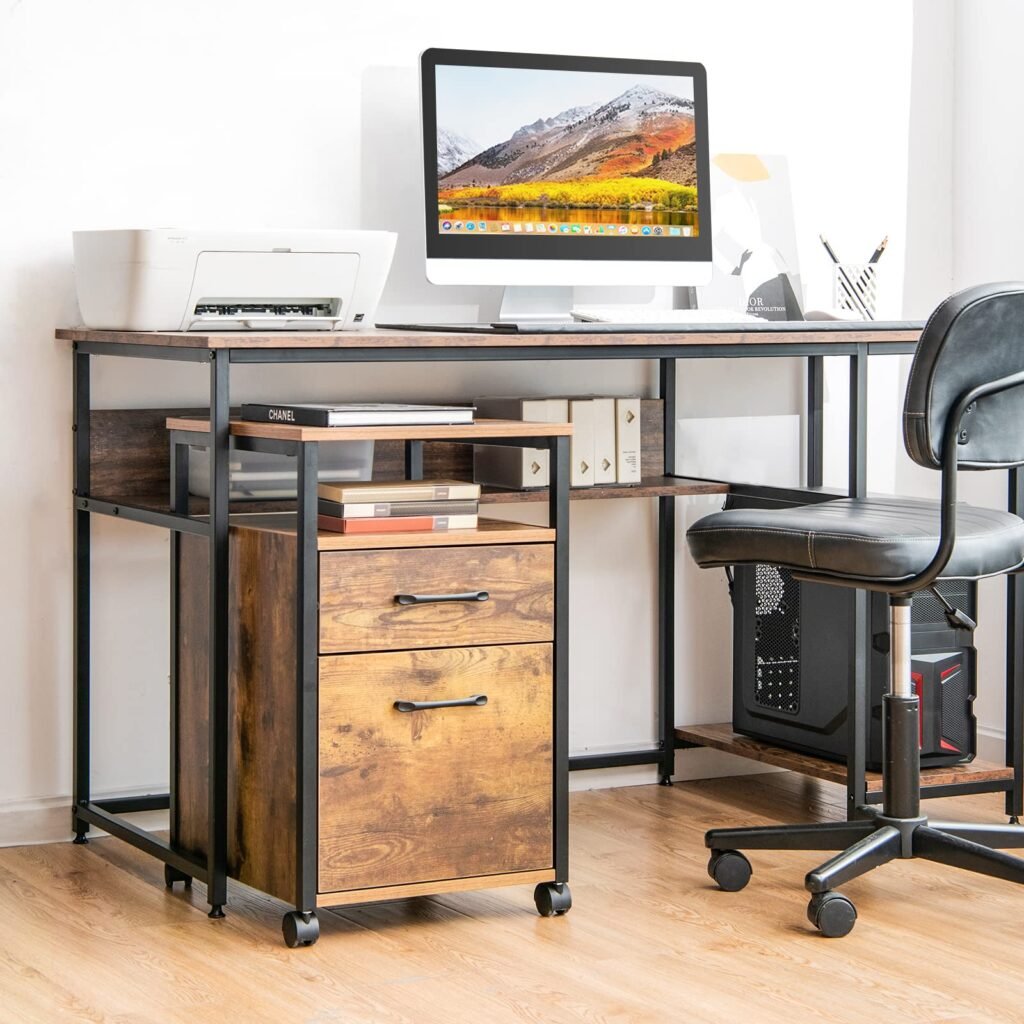
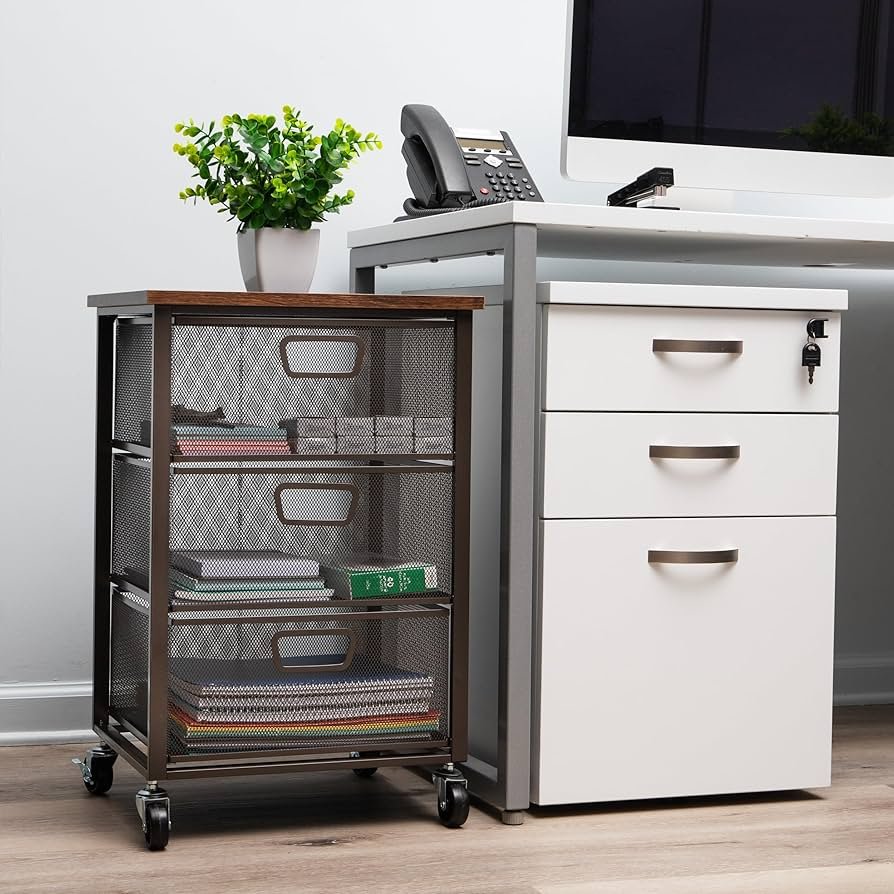
Paper clutter can quickly take over a small office if it’s not contained.
A compact file cabinet keeps documents organized without taking up much space. Most are designed to fit under a desk, making them easy to integrate into your layout.
Two drawers are usually enough — one for supplies and one for files.
Our Recommended Picks:

Why We Like It: The compact size makes it easy to fit under a desk, while the wheels let you move it when needed.

Why We Like It: We like the compact design for keeping important papers organized without requiring much shelf or cabinet space.
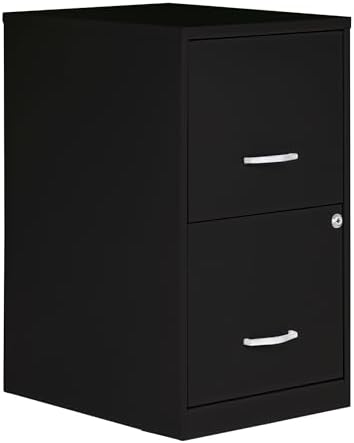
Why We Like It: The locking design provides a secure place for important documents while keeping paperwork neatly contained.
7. Keyboard Trays
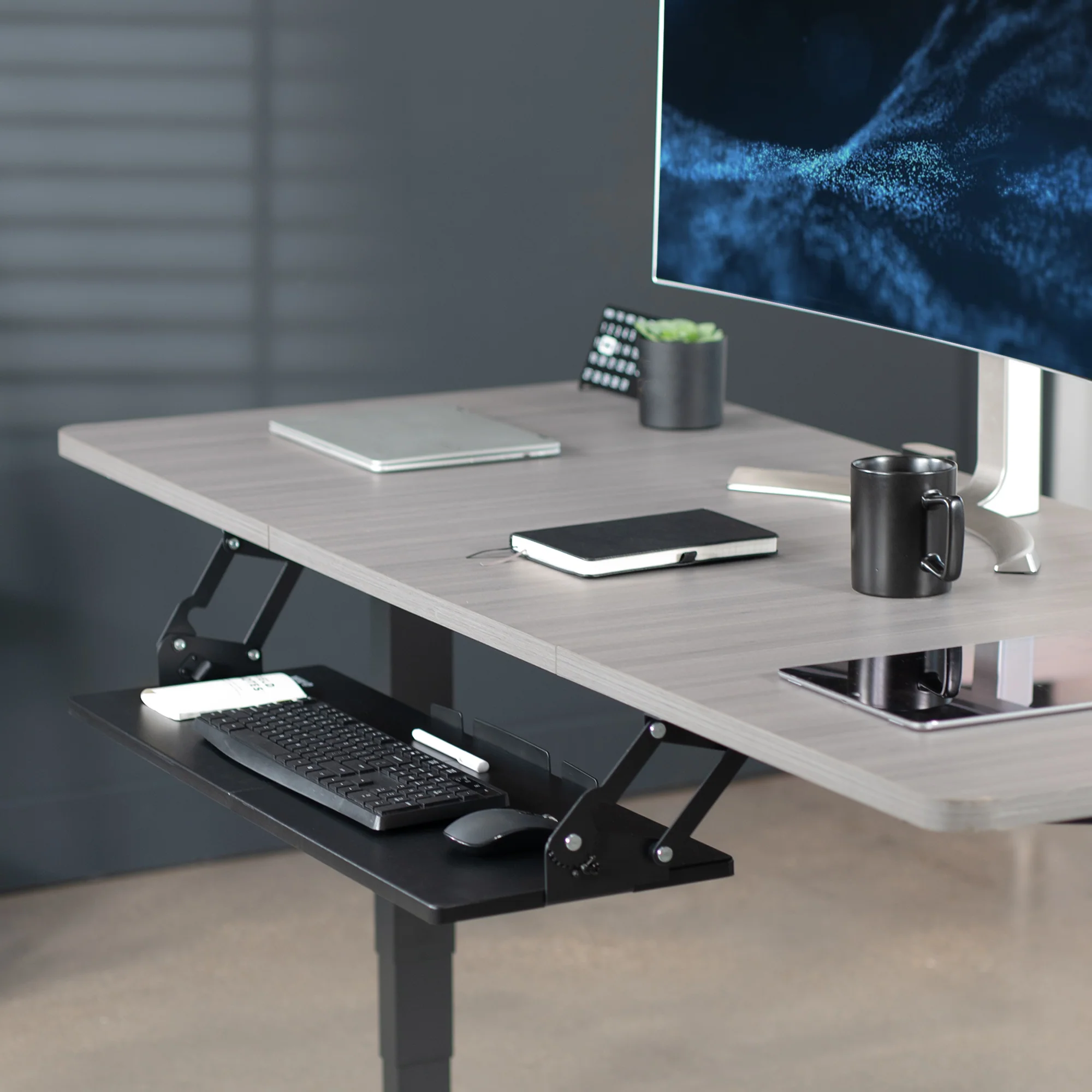
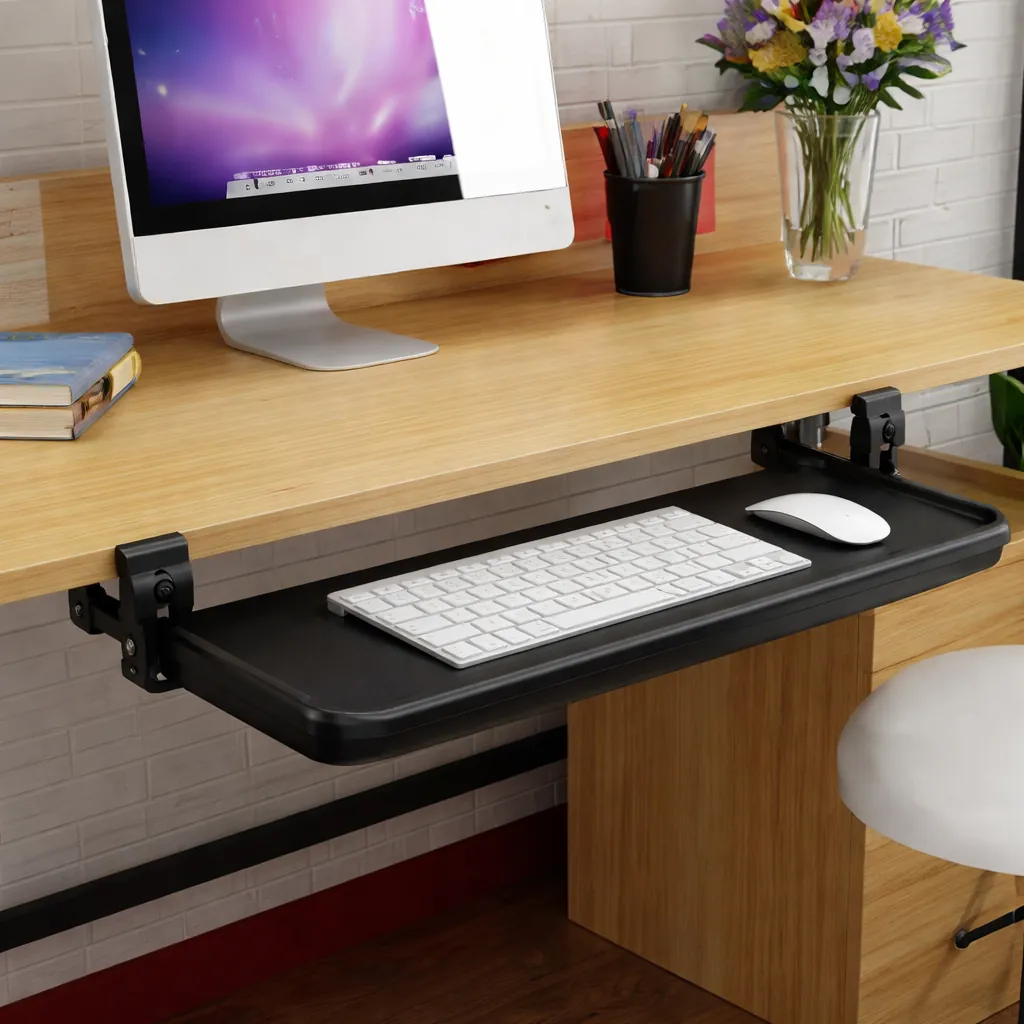
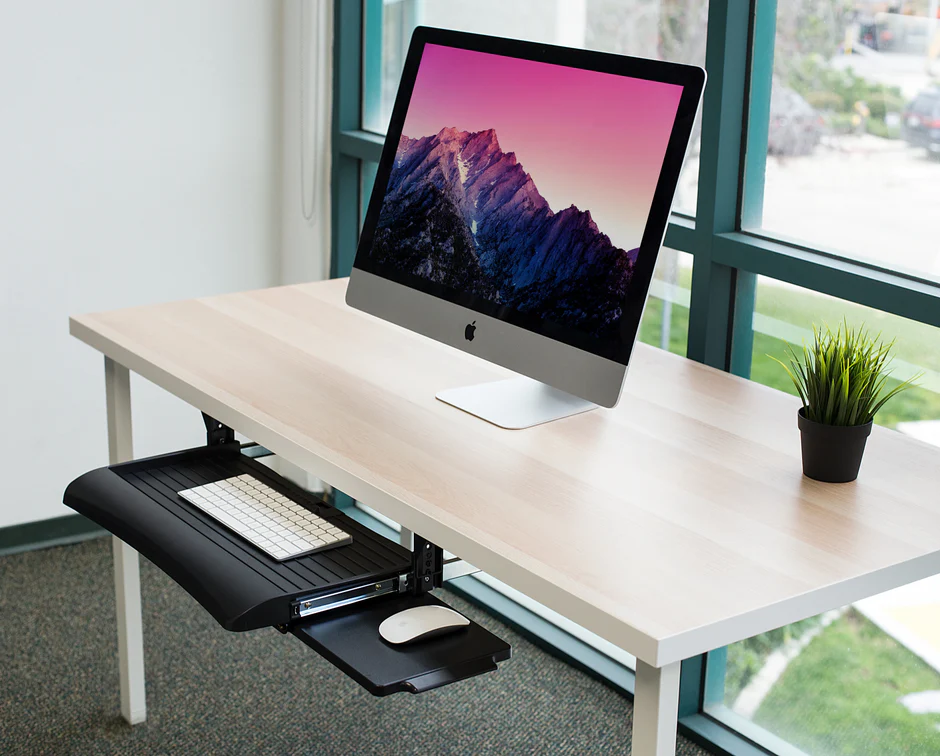
Keyboards and mice take up valuable desk space. A keyboard tray moves them below the desk, freeing up your main work surface.
This creates more room for writing, planning, or working without feeling cramped.
Check for enough space underneath your desk before installing, and consider adjustable trays for better comfort.
Our Recommended Picks:

Why We Like It: The clamp-on design adds a dedicated keyboard surface without permanently altering the desk, freeing up space on top.

Why We Like It: A mounted keyboard tray keeps the keyboard off the main desk surface, freeing up valuable workspace in a small home office. The slide-out design also lets you tuck the keyboard away when it’s not in use.
8. Wall-Mounted File Holders
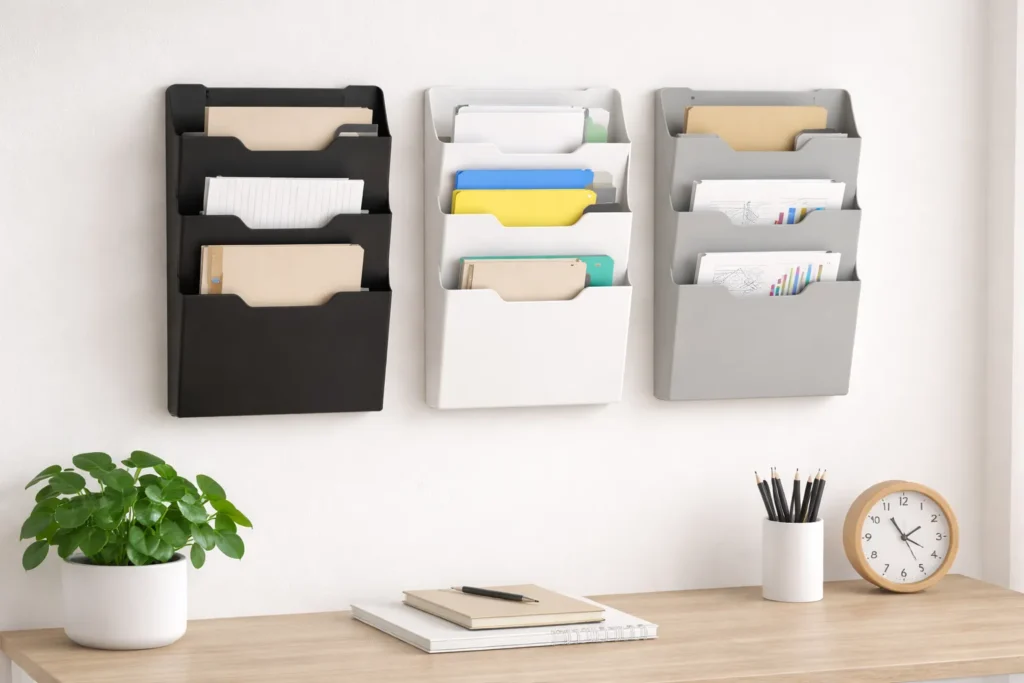
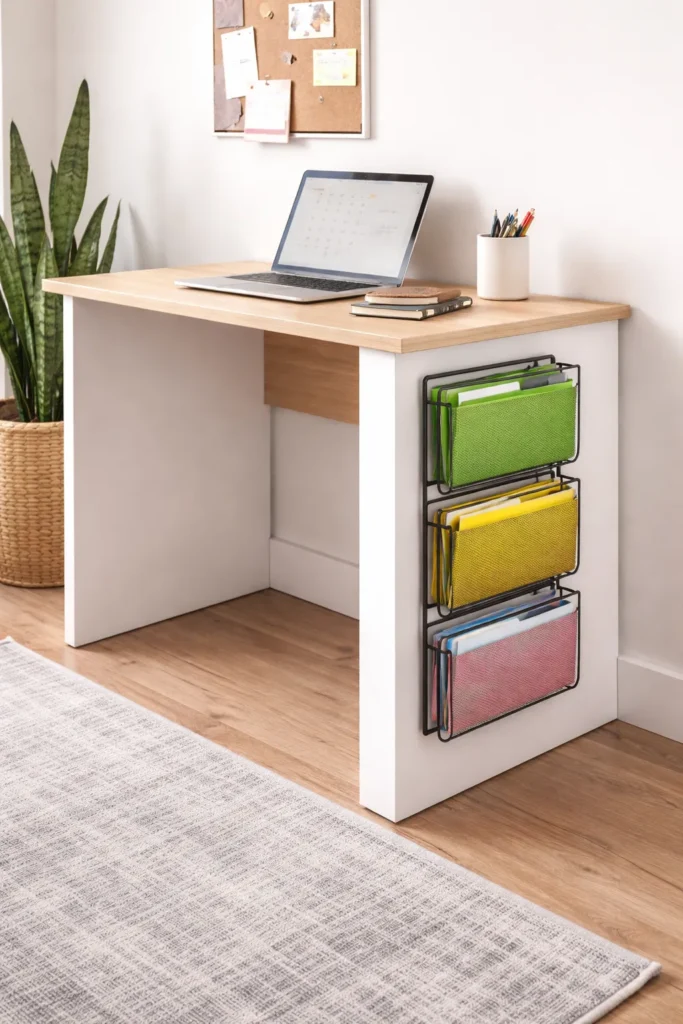
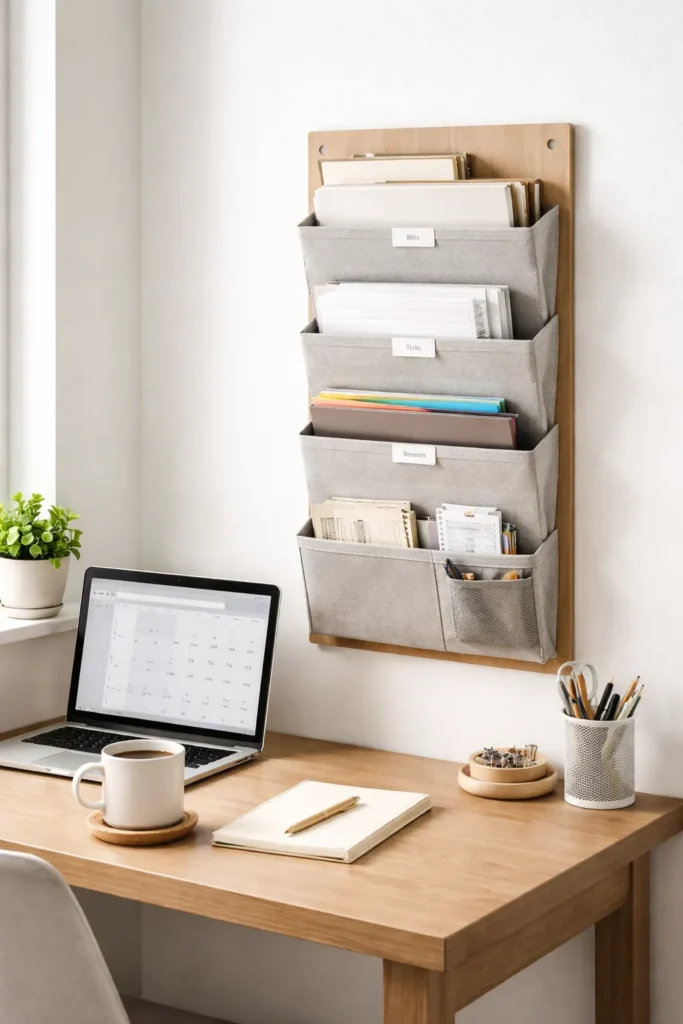
Stacks of paper can overwhelm a small desk. Wall-mounted file holders move documents off your workspace while keeping them visible.
Mount them at a height you can easily reach while seated. This keeps your workflow smooth and efficient.
Slim designs work best to avoid making the wall feel heavy or cluttered.
Our Recommended Picks:

Why We Like It: Five tiers provide plenty of vertical storage for sorting paperwork while keeping the desk completely clear.
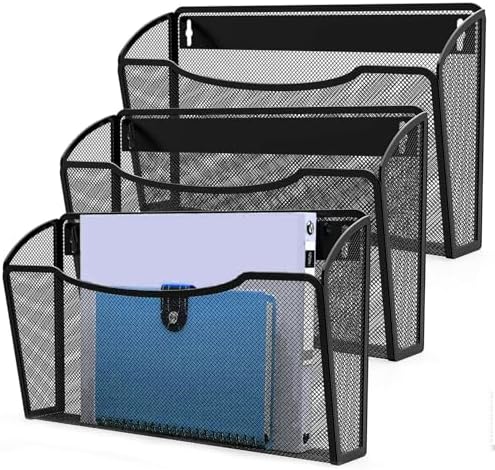
Why We Like It: Three wall-mounted pockets provide a simple way to organize papers, mail, and documents without taking up valuable desk space. The vertical design makes use of often-overlooked wall space while keeping important items easy to reach.

Why We Like It: The ten tiers provide substantial vertical storage for organizing larger amounts of paperwork without taking up valuable desk space.
Final Thoughts
A functional home office isn’t about adding more — it’s about choosing better.
When every item has a clear purpose and place, even a small workspace can feel open, organized, and easy to use. By focusing on vertical storage, multi-functional furniture, and clutter reduction, you can create a setup that supports focus and productivity without expanding your space.
A well-designed small home office should feel efficient, comfortable, and simple to maintain — making it easier to work, think, and stay organized every day.